
Executive Summary
While the city of Atlanta has enjoyed considerable economic growth over the past several decades – with a 25% population increase and an 84% increase in median household income since 20101 – many of its historically Black westside neighborhoods face longstanding socioeconomic disparities following decades of economic disinvestment and exclusion.
English Avenue and Vine City – two neighborhoods on the Westside of Atlanta with a rich Civil Rights history – have experienced some of the most persistent effects of this exclusion. Although significant public, private, and philanthropic investments have been made in recent years, English Avenue and Vine City maintain the highest vacancy rates in the city of Atlanta and the greatest proportion of residents experiencing poverty, with over half of all children living below the federal poverty line.2 Despite these challenges, residents have continued to demonstrate strong aspirations for financial stability, homeownership, and wealth-building, alongside a longstanding commitment to strengthening their communities.
This report details the financial experiences of residents in English Avenue and Vine City, as local stakeholders continue to make strategic investments in these communities. We extend previous research efforts in Atlanta’s Westside by focusing on how community wealth is being siphoned away through unaffordable bills, predatory loans and scams, and other financial hardships. In doing so, this research highlights the need to complement local economic development investments with protections and safeguards against community wealth stripping.
Through surveys, interviews, and focus groups, we document the financial instability many Westside residents experience, as well as the opportunities that can inform effective interventions. Participants in this study share both their financial concerns and their aspirations for financial stability and wealth building as they deal with the challenges of unaffordable housing, income loss, emergency expenses, and the rising cost of living. This report identifies several key findings about Westside residents’ financial experiences and provides recommendations to advance residents’ financial security and mobility:
Access to financial services is not enough—the quality and design of access matter
While most residents have access to traditional banking, access alone does not translate into financial stability. Most Westside residents reported using traditional banks or credit unions, but 68% have also used one or more alternative financial services – like payday loan apps or car title loans – in the past year. This highlights an opportunity to build on residents’ existing use of financial services by ensuring that banking products are transparent, affordable, and responsive to their financial needs.
Recommendation: Expanding Inclusive Banking Pathways
Limited income and financial reserves leave households exposed to financial shocks.
Chronic underemployment and low wages leave many Westside households with limited savings to absorb unexpected financial shocks. Only 19% of Westside residents earning under $25,000 annually could cover an emergency expense of $500 or more, pointing to the need for strategies that help households build long-term financial resilience.
Recommendation: Building Financial Resilience Pathways
Debt and credit barriers can reinforce a cycle of financial vulnerability.
Credit and debt barriers can compound financial vulnerability, pushing some residents toward high-cost or predatory financial products and making it more difficult to build household and community wealth. Approximately 35% of Westside residents identified credit barriers as preventing them from building wealth, while 37% reported using a high-interest lender because they believed a bank or credit union would not approve them.
Recommendation: Creating Affordable Credit Pathways
Different groups experience financial vulnerability in distinct ways.
Financial challenges vary considerably based on residents' socioeconomic statuses and circumstances, including gender, caregiving responsibilities, age, and business owner status, creating distinct combinations of financial pressures and opportunities. For example, Westside women were nearly four times as likely as men to report being able to afford only $100 for an emergency. Meanwhile, Westside business owners reported on average 2.6 more types of debt than non-business owners.
Recommendation: Designing Targeted Financial Mobility Pathways
Housing is both a source of financial strain and a pathway to wealth.
Renters and homeowners have unique financial needs and challenges, but both groups are affected by rising housing costs. Sixty-seven percent of Westside renters cite rent increases as their key financial challenge; 76% of homeowners cite rising property taxes or home insurance costs as theirs. Additionally, there is a need to preserve accumulated wealth from homeownership while expanding additional pathways to wealth-building.
Recommendation: Promoting Housing Stability & Broader Wealth Pathways
These findings indicate an opportunity for continued investment and collaboration among residents, government, philanthropy, financial institutions, employers, and community-based organizations. They also showcase a strong desire among Westside residents to improve their financial conditions, highlighting both the challenges that must be addressed and the opportunities to support residents in achieving greater financial stability and building wealth. Recommended interventions include building a more holistic approach to financial mobility that combines better-designed financial services with enhanced income support, consumer protections, affordable credit, and housing strategies that help residents weather financial challenges and build and sustain greater wealth and opportunity over time.
Background
English Avenue and Vine City were established in the late 19th and early 20th centuries along a dividing line of Black and White Atlanta, reflecting longstanding racial and economic divisions in Atlanta’s history. After the Great Atlanta fire of 1917, Black families were displaced from Atlanta’s Eastside, and many settled in English Avenue and Vine City. Despite opposition and racial violence, residents built thriving Black middle-class communities with strong institutions, businesses, churches, and civic networks. The Westside also played an important role in Atlanta’s Civil Rights Movement, with Dr. Martin Luther King Jr. and Coretta Scott King moving to Vine City in 1967.3
Following the civil rights era, white flight, disinvestment, and subsequent economic challenges led to socioeconomic decline, with Vine City losing two-thirds of its population from 1970 to 2000.4 By the time the Westside Promise Zone was established in 2016, crime rates in English Avenue, Vine City, and surrounding neighborhoods were double the rest of the city; half of the residents lived below the poverty line; and unemployment stood at nearly 20%.5 These economic constraints reflect decades of structural disinvestment rather than a lack of ambition or resilience, as longtime residents, churches, businesses, community organizations, and local institutions have galvanized over the years to sustain their neighborhoods through persistent economic challenges.
Since the early 1990s, government, philanthropic, and nonprofit organizations have invested in revitalizing Atlanta’s historic Westside. The City of Atlanta’s Westside Tax Allocation District (TAD) was expanded in 1998 to English Avenue and Vine City to reinvest property tax revenue into infrastructure and development projects, including millions of dollars for mixed-use developments, workforce development, and public spaces.6 In 2014, a nonprofit partnership - the Westside Future Fund - was formed to further coordinate local revitalization efforts, leading to hundreds of units of affordable housing and the creation of an Anti-Displacement Tax Fund program to help local residents stay in their homes amidst rising property taxes.7
These investments have generated important improvements and created new opportunities, while also raising questions about who benefits from neighborhood growth and how investments can be structured to prevent displacement while strengthening existing residents and institutions. There is persistent concern that large-scale development projects have not adequately addressed the underlying needs of Vine City and English Avenue, and that these projects potentially contribute to rising property values, displacement pressures, and the diversion of public resources from schools and other community priorities.8 Meanwhile, local residents continue to face limited opportunities for economic mobility, with only 5% of children born in English Avenue and Vine City estimated to reach the top 20% of household incomes during adulthood.9
Westside residents have consistently played an active role in shaping how their communities develop, despite these challenges. In the 2017 Westside Land Use Framework, more than 1,000 local stakeholders voiced concern about the need for development without displacement and the need to preserve the Westside’s historic character while addressing vacant properties, improving safety and walkability, and expanding neighborhood-serving retail and services.10 Concerns about development without displacement were further intensified during the 2026 FIFA World Cup, which prompted many residents to voice concerns about unfulfilled promises and ongoing displacement pressures facing their communities.11
Presently, many households face additional pressures from changes to public benefits, including Medicaid, Affordable Care Act (ACA) subsidies, and Supplemental Nutrition Assistance Program (SNAP) assistance, which are anticipated to affect hundreds of thousands of Georgians.12 Considering that over a third of English Avenue and Vine City residents receive SNAP benefits according to the latest U.S. Census data, reductions in food and healthcare assistance will likely further constrain monthly cash flow and increase exposure to financial shocks for households already facing limited income and financial reserves.
Access to safe and responsible financial services is another key challenge in these neighborhoods. With only one full-service brick-and-mortar financial institution in Vine City and English Avenue and limited access to ATMs, residents have few local options for responsible banking and financial services. Lacking other options, residents may face greater exposure to high-fee alternative financial services like check-cashing and predatory lenders who target lower-income neighborhoods, further eroding household and community wealth. The lack of local access to responsible financial services is another legacy of disinvestment - one that continues to shape who has access to affordable capital, opportunities to build wealth, and the financial tools needed to remain and thrive in the Westside.
As local stakeholders continue to invest in these neighborhoods - including through the City of Atlanta's forthcoming multi-billion-dollar Neighborhood Reinvestment Initiative, which identifies English Avenue and Vine City as priority communities13 - it is critical to understand both the historical forces that have constrained residents’ ability to build wealth, and the conditions and investments that can offer lasting benefits for existing residents. This research seeks to examine the financial needs, behaviors, aspirations, and barriers facing English Avenue and Vine City residents, drawing from qualitative and quantitative data to identify potential interventions that support financial stability, long-term wealth-building, and resident-driven economic opportunity.
Methodology
We conducted a mixed-methods study to better understand the financial experiences, challenges, and aspirations of people living in Atlanta’s Westside. We collected data on predatory financial product use, sentiments about financial institutions, savings and wealth-building habits, and other related topics. The study consisted of a 57-question survey and a series of interviews and focus groups. We surveyed 388 residents of Atlanta from March to May 2026. Of these, 172 lived in English Avenue or Vine City, and this report focuses primarily on these respondents. A short screener survey was used to determine eligibility and prevent automated or fraudulent responses. Survey data were captured in Qualtrics and analyzed in RStudio.
Additionally, we conducted one-on-one interviews and focus groups with a total of 37 residents of English Avenue and Vine City between April and May 2026. Residents were asked about their financial goals, money management strategies, experiences with predatory lenders and fees, and thoughts on building economically stronger communities. Focus group and interview participants opted into participation after completing the survey. Interviews and focus groups were recorded, transcribed, coded, and analyzed using Delve.
Survey participants were recruited through Atlanta community organizations, faith groups, and nonprofit partners such as Westside Works - a local workforce development organization focused on serving west Atlanta - and the Georgia Resilience and Opportunity Fund, a nonprofit leader in evidence-based programs to fight poverty and narrow the racial wealth gap in Georgia. Westside residents who completed the survey could opt in to follow-up research, and those who did were contacted to participate in an interview or focus group. There were no additional selection criteria for focus group and interview participation.
Focus groups and interviews were conducted in person, and participants were paid for their time and expertise. Participants were paid $25 for completing a 15-minute survey, $75 for completing a 45-minute interview, and $125 for completing a 90-minute focus group. Focus groups were split by demographics. Focus groups included women-only and men-only groups as well as a group of senior citizens. We also conducted mixed demographic focus groups which included a blend of all eligible residents. Residents were eligible for participation if they were 18 years or older and lived in English Avenue or Vine City at the time of data collection.
Participant Demographics
Surveys
Of the 388 total residents surveyed, 172 (44%) were from English Avenue or Vine City, hereafter referred to as the “Westside” for illustrative purposes, though the broader area of west Atlanta extends beyond these two neighborhoods. The remaining respondents were predominantly from surrounding neighborhoods such as West End, Westview, Bankhead, and Grove Park. Of the English Avenue and Vine City residents, 64% were from Vine City and 36% were from English Avenue.
Among Westside survey respondents, 58% were men and 42% were women. Participants’ ages ranged from 18 to 83 years, with a median age of 36. Many participants in this study were legacy residents, with 43% of Westside respondents living in their current neighborhood for 10 years or longer. Additionally, 78% of respondents reported living with three or more household members, with an average household size of 3.7.14
Of the Westside residents surveyed, 41% were employed full-time, 25% were employed part-time, and 10% were self-employed. An additional 11% were unemployed and looking for work. The remainder included a combination of students, retirees, individuals unable to work, and other groups. Approximately 45% of Westside residents indicated having some form of higher education degree (Bachelor’s, Associate’s, Master’s, Professional degree, Doctorate), while 51% had completed high school, a GED or alternative credential, and/or some college credit.
Westside respondents reported slightly lower incomes than the overall survey sample, with 62% self-reporting annual household incomes of $75,000 or less, compared to 57% of participants overall. This overall distribution is fairly consistent with U.S. Census data, which estimates that 69% of English Avenue and Vine City households earn $75,000 or less. However, the survey sample underrepresents households at the very bottom of the income spectrum, considering that the latest Census data estimate that 34% of households in English Avenue and Vine City have incomes below $25,000, compared with 19% of the Westside survey respondents. This difference may reflect limitations in the survey’s recruitment approach, which relied in part on local organizations and community networks and may not have reached all segments of the population equally. As a result, the financial challenges and needs identified in this analysis may be even more pronounced among the broader population than reflected in the survey findings.
Among Westside survey respondents, 41% self-reported having subprime or near-prime credit scores (659 or less), compared to between 25-30% of all U.S. adults15. Just over 34% of Westside participants reported being homeowners, compared to 39% of the overall sample and 46% of City of Atlanta residents at large, according to the U.S. Census. Whereas 49% of the respondents reported renting their home, room, or apartment, the remainder reported living in temporary housing; with family, friends, or partners; or other housing situations. The survey sample included a higher share of homeowners than the broader population, considering that U.S. Census data indicate that approximately 24% of English Avenue/Vine City households are homeowners. This difference should be considered when interpreting findings that vary by housing type.
Figure 1: Survey Respondent Demographics
|
|
English Avenue/Vine City |
Other Respondents |
Total |
|---|---|---|---|---|
|
# Participants |
172 |
216 |
388 |
|
Median Age |
36 |
34 |
35 |
Gender
|
Male |
58% |
41% |
48% |
Female |
42% |
56% |
50% |
|
Other/Prefer Not to Say |
1% |
3% |
2% |
|
Race
|
Black |
63% |
65% |
64% |
White |
31% |
30% |
30% |
|
American Indian or Alaska Native |
2% |
0% |
1% |
|
Other |
2% |
3% |
2% |
|
Multiracial |
1% |
1% |
1% |
|
Prefer not to say |
1% |
0% |
1% |
|
Ethnicity
|
Hispanic |
6% |
3% |
4% |
Non-Hispanic |
94% |
97% |
96% |
|
Years Lived in Current Neighborhood
|
< 1 year |
2% |
7% |
5% |
1-3 years |
24% |
22% |
23% |
|
4-10 years |
31% |
27% |
29% |
|
10+ years |
43% |
44% |
43% |
|
Annual Household Income (Self-reported)
|
Less than $25,000 |
18% |
21% |
20% |
$25,000 - $49,999 |
24% |
20% |
22% |
|
$50,000 - $74,999 |
20% |
12% |
16% |
|
$75,000 - $124,999 |
19% |
19% |
19% |
|
$125,000 - $199,999 |
9% |
20% |
15% |
|
$200,000 or more |
6% |
3% |
4% |
|
N/A |
5% |
6% |
5% |
|
Credit Score (Self-reported)
|
Poor (300 – 579) |
12% |
14% |
13% |
Fair (580 – 659) |
29% |
26% |
28% |
|
Good (660 – 739) |
33% |
31% |
32% |
|
Very good (740 – 799) |
14% |
16% |
15% |
|
Exceptional (800 – 850) |
5% |
4% |
4% |
|
No credit score |
2% |
1% |
2% |
|
Unsure |
5% |
6% |
6% |
|
Housing Tenure
|
Own |
34% |
44% |
39% |
Rent |
49% |
33% |
40% |
|
Live with others, no payment |
10% |
10% |
10% |
|
Temporary Housing |
3% |
6% |
5% |
|
Unhoused |
1% |
2% |
2% |
|
Other/Prefer not to Say |
3% |
5% |
4% |
Note: Percentages may not add up to exactly 100% due to rounding. All figures throughout this report contain data that was originally collected for the publication of this research.
Focus Groups & Interviews
We conducted focus groups and interviews with 37 residents from English Avenue and Vine City who opted in from survey participation. Focus groups included groups of all women, all men, and all seniors, with the overall sample being majority women, majority Black, and majority renters. This composition provides particularly valuable insight into the financial experiences and priorities of women and caregivers, while also incorporating perspectives from men and older residents.
Figure 2: Focus Group & Interview Demographics
| 37 Participants | Gender | Race | Housing Tenure | Age Breakdown |
|---|---|---|---|---|
| Residents from English Avenue/Vine City | 78% Women 22% Men | 97% Black 3% White | 13% Homeowners 87% Renters | 18-34 years – 29% 35-49 years – 34% 50-64 Years – 17% 65+ years – 20% |
Key Findings & Recommendations
Beyond Access: Expanding Inclusive Banking
Access to financial services is not enough—the quality and design of access matter, necessitating the expansion of inclusive banking pathways.
While most Westside residents have a relationship with a traditional bank or credit union, many use online-only banks and a substantial share turn to alternative financial services. These patterns suggest that being “banked” is not synonymous with being well served. Financial inclusion therefore requires more than connecting residents to financial institutions; it requires building inclusive banking pathways that pair appropriate, affordable products and services with community-informed financial education and engagement.
Beyond being “banked”: differences in access and utilization
While most Westside residents reported having a relationship with a traditional bank or credit union (77%), banking access and utilization take a variety of forms. Notably, 28% reported using an online-only bank, nearly twice the rate among other respondents (15%). This includes residents who maintain online-only accounts alongside other financial institutions, suggesting that residents may layer banking relationships to meet different financial needs rather than relying on a single institution.
Figure 3: Westside Residents’ Banking Access & Utilization
| Banking access or utilization | Westside respondents |
|---|---|
Uses a traditional bank or credit union (overall) |
77% |
Uses an online-only bank (overall) |
28% |
Uses an online-only bank (exclusively) |
9% |
Uses multiple types of financial institutions |
31% |
No response to banking question |
14% |
Focus group and interview responses help to explain residents’ concerns with conventional banking institutions, stemming from unexpected or unfair fees, confusing terms, and distrust. Among Westside residents, being served does not always mean being served well, as access to a financial institution does not necessarily translate into a positive or supportive banking experience. As one participant shared:
"I mean, they didn't really offer much support when I was penalized with fees and they didn’t offer any types of rewards and benefits and stuff like that.”
Another explained:
“I still do not have a bank account, that way I don’t have to worry about wrongdoing.”
Distrust extended beyond individual experiences to perceptions of the broader mainstream banking system and its relationship with the community. As one resident shared:
“I know a lot of people kind of stray away from traditional banking, especially in our community. People have misconceptions.”
Even when respondents had heard good things about banks and credit unions, they didn’t see a path to leveraging those benefits for themselves:
“People have lots of great things to say about credit unions, but I don't really know how to use that to my benefit."
Residents' perceptions of online banks were similarly mixed. Participants praised online banks such as Chime for features like automated savings, quick access to small-dollar loans, and credit-builder products, while also expressing frustration with automated-only customer support. Several participants emphasized the importance of user-friendly digital platforms that make it easier to budget, save, and track expenses. These perspectives suggest that residents value the convenience and flexibility of digital banking, while still wanting access to responsive, human support when they encounter problems or have questions.
Banking access does not guarantee financial security
Among Westside residents, banking access did not necessarily translate into financial security. As shown in Figure 4, 86% of residents reported having either a checking account or a savings/money market account, although savings account uptake was lower among Westside residents than other respondents (40% vs. 56%). This points to the need for wider and more varied account access. Specialty accounts such as Second Chance accounts may be helpful options for individuals who have difficulty qualifying for a traditional bank account.
Residents also reported saving outside of conventional accounts, with 15% exclusively using cash (non-digital) savings and 5% saving exclusively through peer-to-peer apps such as Zelle, Venmo, or Cash App.
Figure 4: Banking & Savings Account Ownership
Savings and Account Types |
Westside Respondents |
Other Respondents |
All Respondents |
|---|---|---|---|
Has a checking account |
75% |
75% |
75% |
Has savings or money market account |
40% |
56% |
49% |
Has a checking and/or savings/money market account |
86% |
84% |
85% |
Has savings in cash (exclusively) |
15% |
6% |
10% |
Has money saved in a peer-to-peer app (overall) |
24% |
21% |
22% |
Has money saved in a peer-to-peer app (exclusively) |
5% |
5% |
5% |
Residents with savings accounts were more financially resilient than those without. As shown in Figure 5, those with savings accounts were more likely to have money left over at the end of the month (50% vs. 13%), more likely to save regularly (22% vs. 16%), and more likely to be able to afford a $500+ emergency expense (62% vs. 48%). However, savings account holders also reported substantial financial strain: 82% had used at least one alternative financial service in the previous year, 62% had experienced unexpected banking or loan fees, and 59% reported that finances control their lives “often” or “almost always.” These findings suggest that while bank account ownership is associated with greater financial capacity, residents can still experience financial strain – pointing to the need for greater interventions than account access alone.
Figure 5: Westside Financial Experiences With & Without Savings Accounts
Financial experience |
Has savings/money market account (n=68) |
No savings/money market account (n=104) |
|---|---|---|
Report having monthly surplus often/almost always |
50% |
13% |
Report saving regularly |
22% |
16% |
Can afford $500+ emergency expense |
62% |
48% |
Has used 1+ alternative financial service in past 12 months |
82% |
58% |
Has experienced unexpected banking/loan fees |
62% |
36% |
Reports that finances control their life often/almost always |
59% |
34% |
Use of alternative financial services
Beyond traditional bank accounts, a majority (68%) of Westside residents reported using one or more alternative financial services in the past year. These services include products offered outside traditional banks and credit unions that can provide short-term access to credit or cash but often carry higher fees and interest costs. Examples include car title loans, short-term installment and online personal loans, check-cashing services, Buy Now Pay Later (BNPL), and payday loan apps (also known as earned wage access or EWA), as discussed further in section three.16
As shown in Figure 6, common categories of alternative financial services used by Westside residents include alternative borrowing/high-cost credit products, used by 39% of residents; cash-flow management/short-term liquidity services like BNPL and payday loan apps (36%); alternative banking/cash-access services (32%); and alternative sources of cash, such as plasma/platelet donation and pawning items for cash (9%).
Figure 6: Alternative Financial Services Used in the Past Year
Category |
Westside Respondents |
|---|---|
Alternative borrowing / high-cost credit — short-term installment loans, online personal loans, car title loans, bail bonds |
39% |
Cash-flow management / short-term liquidity — Buy Now Pay Later, Earned Wage Access (EWA) |
36% |
Alternative banking / cash-access services — credit card cash advances, fee-based check cashing |
32% |
Alternative sources of cash — pawned an item, plasma/platelet donation |
9% |
Used 1+ of the above categories |
68% |
Used 2+ of the above categories |
35% |
None of the above |
32% |
*Note: Calculations exclude four datapoints where the alternative financial services question was left blank. Because respondents could select multiple services, category percentages are not expected to sum to 100%.
There was considerable overlap between Westside residents who had used alternative financial services and those who also reported mainstream banking challenges. For example, among the 46% of Westside residents who reported being charged unexpected loan or banking fees, 85% had also used one or more alternative financial services in the past year, compared to 50% of residents who had not experienced unexpected fees.
Use of alternative financial services was also higher among participants who had been charged overdraft or non-sufficient funds (NSF) fees, been denied an application to open a bank account, or experienced an involuntary bank account closure in the past year. These patterns suggest that some residents may be doubly impacted; they experienced challenges within the mainstream banking system while also relying on alternative financial services that may carry additional costs or risks.
Qualitative findings illustrate how financial pressures and the complexity of financial products can shape residents’ decisions to use alternative financial services. Participants described how life stressors can lead to making financial decisions with limited time or capacity to fully evaluate product terms. As one participant observed:
“People do it all the time, where they're stressed out, and they don't read the fine print.”
Alternative financial product use should therefore not be understood simply as a consequence of being unbanked or underbanked. Many residents have relationships with mainstream financial institutions while also using alternative products to manage credit, cash flow, or short-term needs. The issue is not whether mainstream options exist, but whether they adequately meet residents’ needs. Where they fall short, they may inadvertently push some residents toward higher-cost alternatives.
Residents’ vision for banking: transparent, inclusive, and empowering
Residents expressed a strong desire for accessible, community-based banking services and financial education that can help them build financial security. In the survey, 41% of Westside residents expressed interest in learning more about banking, credit-building, or financial coaching. Focus group participants additionally identified budgeting, understanding credit, interest rates, and credit cards as key topics of interest. One participant shared:
"Greater education on interest rates would change lives.”
Residents emphasized that financial education should extend beyond schools and financial institutions and should be embedded locally - particularly for youth. As one participant noted:
“Learning how to manage a bank account should be taught in the community and within the home. Don’t just wait for the school to teach them.”
Residents emphasized that education should be designed for people with different learning styles and accessibility needs, and that people should receive incentives for positive banking relationships and financial behaviors. Several participants highlighted social media and online videos as useful tools for learning at their own pace, while others noted that online learning can make it easier to revisit information.
Residents' descriptions of their “dream" banking services point toward a model that combines transparent and appropriate financial products with trusted human support, community-based education, accessible technology, and opportunities to build credit, savings, and wealth over time.
Income & Savings: Building Financial Resilience
Limited income and financial reserves leave households exposed to financial shocks, necessitating greater financial resilience pathways.
Beyond the need for more inclusive banking, survey and focus group findings point to a deep structural driver of financial vulnerability: household economic resources. In the Westside, vulnerability is driven more by household income than by banking access or demographic characteristics alone. For many residents with little financial cushion, financial shocks can quickly become crises – highlighting the need for greater income mobility and enhanced pathways to build long-term financial resilience.
Income is the strongest predictor of financial vulnerability
Across the survey data, clear differences emerged across socioeconomic and demographic groups. As shown in Figure 7, lower-income households were disproportionately represented among Black residents, women, and those with a high school diploma/GED or less, while higher-income households were more likely to be white, male, homeowners, and/or college graduates.
Figure 7: Characteristics of Westside Residents by Household Income
|
Household Income |
<$25K |
$25K–$49K |
$50K–$74K |
$75K–$124K |
$125K–$199K |
$200K+ |
|---|---|---|---|---|---|---|---|
Race |
Black |
97% |
62% |
47% |
72% |
47% |
20% |
|
White |
0% |
26% |
53% |
22% |
53% |
80% |
Gender |
Women |
74% |
62% |
26% |
22% |
20% |
0% |
|
Men |
26% |
38% |
74% |
78% |
80% |
100% |
Education |
High school/GED or less |
58% |
36% |
21% |
25% |
0% |
0% |
|
Some college (no degree) |
32% |
26% |
35% |
22% |
0% |
10% |
|
College degree or higher |
10% |
38% |
44% |
53% |
100% |
90% |
Employment |
Full-time employed |
13% |
48% |
47% |
47% |
53% |
70% |
|
Unemployed* |
35% |
7% |
6% |
6% |
0% |
0% |
|
Other employment status** |
52% |
45% |
47% |
47% |
47% |
30% |
Housing Tenure |
Homeowner |
3% |
19% |
32% |
47% |
87% |
100% |
|
Non-homeowner
|
97% |
81% |
68% |
53% |
53% |
0% |
Note: Percentages are calculated within each household-income bracket and exclude respondents who did not report household income. Percentages may not sum to exactly 100% because of rounding and response categories not displayed.
*Unemployed includes respondents who were out of work and looking for work and those out of work but not currently looking for work.
**Other employment status includes part-time, self-employed, student, retired, disabled/unable to work, homemaker, and other.
However, when multiple variables were compared, many of these observed differences were substantially reduced when looking at measures of financial stability. Across the analysis, income emerged as the strongest independent predictor of financial vulnerability, suggesting that differences in financial stability are driven less by demographic characteristics than by differences in the economic resources available to households. This is supported by the residents’ own view that income is their greatest obstacle to building wealth, with 52% of Westside residents identifying “low income” as their top barrier.
As shown in Figure 8, lower household incomes were strongly associated with a range of financial vulnerability indicators:
Credit: 68% of households earning less than $25,000 self-reported having credit scores below 660, compared with 6% of those earning $75,000–$125,000.
Savings capacity: 52% of households earning less than $25,000 reported difficulty paying bills “often” or “almost always,” compared with 12% of those earning $75,000–$125,000.
Financial vulnerability: Only 19% of households earning less than $25,000 reported being able to afford a $500+ emergency expense, compared with 91% of those earning $75,000–$125,000.
Financial outlook: 45% of households earning less than $25,000 reported being “somewhat” or “much” worse off financially than 12 months earlier, compared with 6% of those earning $75,000–$125,000.
Education and employment were also associated with financial outcomes, although income was a stronger and more consistent predictor. Higher education and employment were both associated with better credit and greater emergency savings – with 63% of all employed respondents reporting a credit score of 660 or above, compared with 23% of respondents who were not employed. Residents with a college degree or higher were also twice as likely to have $1,000+ in emergency savings than those without a college degree. However, once income and other socioeconomic characteristics were considered simultaneously, education and employment largely lost their independent statistical significance. This suggests that education and employment primarily operate as upstream pathways to financial stability, while household income is the more immediate factor shaping financial resilience among Westside residents.17
Figure 8: Westside Residents’ Financial Outcomes by Household Income
Annual Household Income (Self-Reported) |
<$25K |
$25K–$49K |
$50K–$74K |
$75K–$124K |
$125K–$199K |
$200K+ |
|---|---|---|---|---|---|---|
Credit (Self-Reported) |
||||||
Poor (300–579) |
32% |
19% |
6% |
0% |
0% |
0% |
Fair (580–659) |
35% |
45% |
50% |
6% |
7% |
0% |
Good (660–739) |
13% |
17% |
38% |
75% |
53% |
0% |
Very good (740–799) |
0% |
12% |
0% |
19% |
40% |
60% |
Exceptional (800–850) |
3% |
2% |
6% |
0% |
0% |
40% |
Saving Capacity |
||||||
Saving regularly |
0% |
10% |
15% |
19% |
53% |
70% |
Difficulty paying bills – often/almost always |
52% |
20% |
35% |
12% |
7% |
0% |
Money left over at the end of the month — often/almost always |
13% |
19% |
15% |
41% |
67% |
70% |
Financial Vulnerability |
||||||
Could handle $100+ emergency expense |
42% |
67% |
94% |
100% |
100% |
100% |
Could handle $500+ emergency expense |
19% |
31% |
53% |
91% |
93% |
100% |
Has experienced an inability to afford basic necessities due to debt |
52% |
31% |
35% |
25% |
13% |
0% |
Financial Outlook |
||||||
Reports that their household is somewhat or much worse off financially than 12 months ago |
45% |
37% |
18% |
6% |
0% |
20% |
Feels they currently have opportunities to build long-term wealth |
19% |
28% |
21% |
31% |
47% |
80% |
Note: Percentages are calculated within each income bracket and exclude respondents who did not report household income.
When compared with the larger dataset, Westside residents reported levels of educational attainment, employment, racial demographics, and credit scores similar to other survey respondents. However, they were underrepresented in higher-income groups, with only 15% of Westside residents reporting household incomes of $125,000 or more, compared with 23% of other respondents. Westside residents also reported greater reliance on public benefits, including Temporary Assistance for Needy Families, or TANF (19% vs. 10%); housing or rental assistance (17% vs. 10%); and Supplemental Security Income or Social Security Disability Insurance (9% vs. 4%). Together, these findings suggest that a greater share of Westside households are operating with limited financial margins and fewer resources to absorb income fluctuations or unexpected expenses.
Possible interventions to support income growth among Westside residents include expanding access to higher-wage career pathways, workforce training, and credentialing opportunities, such as those offered by local nonprofits like Westside Works, a local workforce development organization. Expanding guaranteed-income and other cash assistance programs – such as the “In Her Hands” initiative piloted locally by the Georgia Resilience and Opportunity Fund18 - could also provide greater financial stability, as well as helping residents access eligible public benefits and navigate the “benefits cliff” as household earnings increase. Employers can play a role as well by offering living wages and emergency assistance for workers facing short-term financial disruptions.
Building savings and financial resilience amid income constraints
Supporting income growth is particularly important to help strengthen the financial cushion residents are working to build and help them absorb unexpected expenses. For many Westside residents, building that cushion is difficult when little income remains available for savings. This is reflected in the fact that 78% of Westside residents reported having trouble paying monthly bills “sometimes,” “often,” or “almost always.” Additionally, only 19% reported being able to save regularly for non-retirement needs, while 28% were not currently saving and 54% were saving only when possible.
The qualitative findings reinforce that residents have a strong desire to save and build financial security, but high costs and limited financial margins can make it difficult to do so. Participants repeatedly described wanting to build savings and greater financial security while having little or no money left after meeting current needs:
“I would love to be able to have a savings account, but I am just not able.”
Another explained:
“At this point, I don’t even know what savings are. What are savings? I want to be able to do this, but I do not have anything left to do so.”
Residents also described financial security as more than simply having enough money to pay their bills. One participant defined it as:
“[H]aving enough funds for food or like, at least three months’ worth of savings.”
This is an emergency savings goal that few households could afford, with only 28% of Westside households able to handle an emergency expense of $1,000 or more.
As one resident described:
“It’s like trying to rub pennies together to have enough.”
These findings suggest that financial resilience in the Westside is cumulative: households with sufficient resources can more readily build reserves, while households with little financial slack may struggle to save even when they understand the importance of doing so. Rather than asking how residents can become better at budgeting, the findings raise a broader question: how can we support residents to build enough financial capacity that one unexpected expense does not trigger a cascade of financial problems?
Financial shocks can quickly become financial crises
Limited financial reserves become particularly consequential when households experience unexpected expenses or income disruptions, which were widespread among residents surveyed. In the past year, 69% of Westside residents experienced at least one significant unexpected expense, and 28% experienced three or more. As shown in Figure 9, common unexpected expenses included major out-of-pocket medical or dental expenses (reported by 30% of Westside residents), vehicle repairs or replacements (28%), computer or mobile phone repairs or replacements (27%), and house or appliance repairs (22%).
Figure 9: Common Unexpected Expenses Among Westside Residents
Major Unexpected Expenses in the Past Year |
% Reporting |
|---|---|
A major out of pocket medical or dental expense |
30% |
A major vehicle repair or replacement |
28% |
A computer or mobile phone repair or replacement |
27% |
A major house or appliance repair |
22% |
Increase in childcare or dependent care expenses |
16% |
Legal expenses, taxes, or fines |
16% |
Moving costs |
11% |
None of the above |
29% |
Note: Calculations exclude blank datapoints. Because respondents could select multiple expenses, category percentages are not expected to sum to 100%.
In focus groups and interviews, many residents expressed anxiety and fear about potential financial setbacks, sharing:
“I live paycheck to paycheck and know that anything can happen. That would be terrible”
“I just live on a prayer, but it is very stressful…fear of the future.”
"My biggest fear is, like, what if something significant happens, and I don't have the financial means.”
These concerns were further compounded by income instability. In the survey, 82% of Westside residents reported at least one significant drop in household income in the past year, including 38% due to unemployment or furlough; 30% due to a reduction in work hours; 27% due to a reduction in wages; and 21% due to a loss of government benefits. These experiences frequently overlap, as 82% of residents who experienced a significant drop in income also reported experiencing a major unexpected expense. Residents who experienced a significant drop in income were also more than three times as likely to have used at least one alternative financial service in the past year than residents who reported no significant income drop, potentially suggesting greater vulnerability to high-cost alternatives during periods of financial strain.
Importantly, this is not only an issue of consumer education. Predatory lenders profit by taking advantage of consumers in stressful financial situations who feel they have limited options. As one Westside resident explained:
“People may have an emergency, or they’re in a bind, and so, people do it all the time, where they’re stressed out, and they don’t read the fine print[…] then the people in the store just tell you any old thing.”
The result can be a cycle in which a relatively modest financial disruption leads to higher-cost debt or additional expenses, further reducing a household's ability to absorb the next shock. Breaking this cycle will require more than financial education or access to banking - it will require strategies that help residents build emergency savings and access affordable support when unexpected expenses arise. Recommended approaches include low-barrier and matched savings opportunities, community-based emergency stabilization funds, and affordable small-dollar loans that can help residents weather short-term financial shocks without turning to high-cost alternatives.
Residents need greater community support
Participants expressed a desire for greater emergency financial assistance during periods of crisis, with one resident summarizing this need simply:
“I feel like I need a safety net.”
For many residents, that safety net already includes family, friends, and community organizations that provide important support during periods of financial instability. Atlanta’s Westside is home to a range of organizations and programs offering support, but participants’ experiences suggest that these resources do not always go far enough. As one resident shared:
“I need a lot more support than what I am getting, that's for sure.”
Strengthening this existing support network - with greater resources, stronger coordination, and easier pathways to assistance - could help ensure that residents can access support when they need it most.
Taken together, these findings suggest that financial resilience should be treated as a community-level economic security issue, not simply an individual savings goal. Residents need pathways that help them increase income, stabilize cash flow, build savings, and access safe sources of emergency liquidity before a temporary disruption becomes a long-term financial crisis.
Debt & Financial Vulnerability: Creating Affordable Credit Pathways
Credit and debt barriers reinforce a cycle of financial vulnerability, underscoring the need for greater access to affordable credit that can help residents manage debt and build wealth.
Credit and debt sit at the intersection of Westside residents’ financial resilience challenges. While credit can be an important tool for managing expenses, credit challenges can also push residents toward high-cost borrowing, leading to further debt and credit damage that makes it harder to access mainstream credit and accumulate wealth. Consequently, affordable credit pathways are needed to help residents avoid high-cost debt, build or repair credit, reduce existing debt burdens, and use credit as a tool for wealth-building rather than as a mechanism for managing recurring financial shortfalls.
Credit barriers can push residents toward higher-cost borrowing
Credit barriers were a significant concern among Westside residents. Among the survey respondents, 35% of Westside residents identified credit barriers as preventing them from building wealth, while 34% reported having recently been denied a loan or credit application. Credit challenges were particularly acute among residents with lower incomes, lower credit scores, and lower savings capacity, with residents with credit scores under 660 being 2.2 times as likely to report a recent loan or credit denial as those with good or better credit.
Overall, 37% of Westside residents reported using a high-interest lender because they believed a bank or credit union would not approve them. In some cases, the use of high-cost lenders was linked to not fully understanding the terms of the financing or knowing other options. Among the Westside survey respondents, 42% reported having taken a loan with an interest rate they did not fully understand; 31% reported signing loan documents they did not have time to review; and 24% reported having been encouraged to refinance or roll over a loan multiple times. As one participant shared:
“That [taking out a predatory loan] was the dumbest thing that I’ve ever done in my life. They didn’t explain that whole system to me.”
For residents who turn to high-cost lenders, the consequences extend beyond the immediate cost of borrowing. Among residents who reported using a high-cost lender, 51% had been contacted by a debt collector, 41% had experienced wage garnishment, arrest, or property seizure/threat due to debt, and 60% reported being unable to save for retirement or reducing their retirement savings.
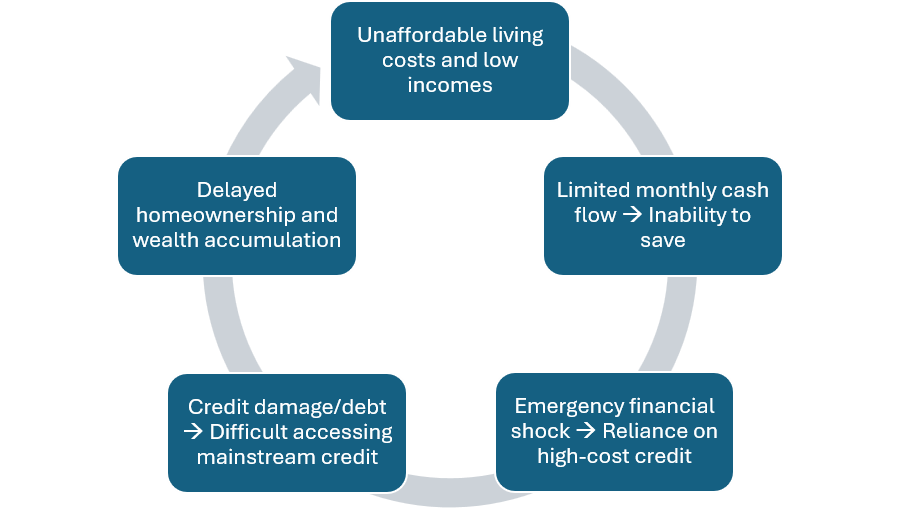
These outcomes can contribute to a cycle of financial vulnerability in which financially-strapped residents are pushed into reliance on high-cost borrowing, particularly when facing one-time emergencies and financial shocks. In turn, high-cost debt can further impair their overall credit position, limiting opportunities to access safe and affordable loans. This creates an ongoing feedback loop that delays longer-term wealth-building and limits access to opportunities like homeownership.
Figure 10: The Cycle of Financial Vulnerability for Westside Residents
Debt stacking creates multiple layered vulnerabilities
The financial consequences of debt are compounded by carrying multiple forms of debt simultaneously. As shown in Figure 11, credit card debt was the most common form of debt reported in the prior year, affecting 42% of Westside respondents, followed by auto loans (37%), student loans (31%), and medical debt (22%). In the past year, 84% of Westside residents indicated carrying at least one type of debt, while 40% had two to three types of debt and 20% had four or more.
Figure 11: Westside Residents’ Credit & Debt Utilization
| Credit or debt type | Westside respondents |
|---|---|
Credit card debt |
42% |
Auto loan debt |
37% |
Student loan debt (federal or private) |
31% |
Medical debt |
22% |
No credit/debt |
16% |
1+ types of debt |
84% |
2–3 types of debt |
40% |
4+ types of debt |
20% |
Debt stacking matters because the financial burden of debt is cumulative. While a household managing an auto payment, credit card balance, medical bill, and student loan may be able to remain current on each obligation, there is often little left over for savings, housing costs, or unexpected expenses. Debt can therefore constrain wealth-building even when it does not result in delinquency or default. This is corroborated by the fact that Westside residents who reported two or more types of debt were more than twice as likely to state that debt had prevented them from saving for retirement as desired, compared to residents with one type of debt or fewer.
Other Georgia-specific research reinforces this finding: a 2026 study of families who had exited the Temporary Assistance for Needy Families (TANF) program found that participants carried multiple forms of debt, including student, medical, credit card, and utility debt, with a median total debt burden of $7,000.19 The study suggests that moving off public assistance and into employment does not necessarily translate into financial stability when households continue to carry substantial debt burdens. Together, this evidence illustrates how debt can accumulate across multiple obligations, limiting the resources households have available to build savings, withstand financial shocks, and pursue longer-term financial goals.
Different forms of debt pose unique challenges
Experiences with debt are not uniform experiences, as different types of debt are associated with different financial needs and capacities. Interventions should include focused debt management and debt reduction strategies for different types of debt, in addition to overall credit counseling.
Credit Card Debt
Credit card debt was the most common form of debt, reported by 42% of Westside residents in the past year. Credit card debt cuts across demographic lines, with no statistically significant differences in race, income, education, employment, homeownership, or gender when evaluating whether people had credit card debt. However, there were common challenges among individuals with credit card debt, who were more likely to have used a high-interest lender because they didn’t believe they could get approved elsewhere (49% vs. 27% among non-credit card debt holders), and more likely to identify credit barriers as preventing wealth-building (47% vs. 26%).
In focus groups and interviews, a theme of skepticism regarding credit cards emerged, with some participants sharing that they either had never learned to use credit cards well or had witnessed negative credit card impacts on others. As one participant stated:
“I saw what these (credit cards) did to my mom’s situation so I was never interested.”
These findings show the need for greater education on responsible use of credit cards and further study of their impacts on residents’ overall financial wellbeing. Potential strategies for credit card debt include debt management plans, in which nonprofit credit counseling agencies negotiate restructured payment plans with creditors such as credit card companies; this typically results in a single monthly payment with reduced interest and total costs.
Auto Loan Debt
Auto loan debt was the second most common form of debt, reported by 37% of Westside residents. Auto debt poses unique challenges in that vehicles are typically depreciating assets, with ongoing maintenance and repair costs and related obligations like car insurance and fuel. Indeed, 28% of Westside residents reported a significant unexpected auto-related expense within the past year, suggesting an opportunity for interventions that aid with ongoing maintenance costs. Auto loan borrowers were also more than twice as likely as non-auto loan borrowers to report that debt had caused them to reduce or stop saving for retirement, suggesting that auto debt may compete with residents’ ability to save for long-term financial goals.
Within the focus groups and interviews, participants shared challenges related to both qualifying for auto loans and obtaining auto loans at excessive rates, with one resident sharing:
“After getting an auto loan, I paid for the car three times over.”
Recent research from the Center for Responsible Lending (CRL) further underscores these concerns, finding that subprime borrowers often face high-cost financing, dealer markups, unaffordable loan terms, and aggressive repossession practices. In 2025, subprime borrowers paid an average APR of roughly 20% - about twice the rate paid by prime borrowers - and CRL found that repossession can further destabilize households by threatening access to the transportation needed for work and daily life.20 These findings suggest the need for targeted interventions to help residents obtain affordable auto financing, afford ongoing maintenance needs, and avoid repossession.
Student Loan Debt
Student loan debt was the third most common form of debt, with 31% of Westside residents indicating having federal and/or private student loans. This type of debt was more prevalent among residents with higher educational attainment, although student-loan borrowers had similar employment and income profiles as residents with other types of debt. Nearly half of Westside student debt borrowers had household incomes below $50,000, and they were more likely to report that debt had led to reduced retirement savings (53% vs. 29% among non-student debt holders) and delays in starting a family (26% vs. 9%). This highlights that despite their higher educational attainment, student debt holders face unique constraints on economic resources that impact long-term outcomes.
These findings are particularly relevant as federal student loan collections have resumed, with more than 2.2 million student loan borrowers nationally seeing their credit scores fall by more than 100 points since early 2025.21 With federal student loan policies and repayment options continuing to change, greater investment is needed in student loan counseling to help borrowers identify the repayment, forgiveness, and debt relief options for which they may qualify.22
Medical Debt
Past due medical bills were the fourth most prevalent type of debt reported, affecting 22% of Westside residents. Personal health issues were also the top ranked stressor on household finances, affecting 29% of Westside residents, while 12% indicated healthcare costs as a barrier to wealth-building. In addition, 27% indicated skipping or delaying medical care due to debt challenges, and 30% reported a major out-of-pocket medical or dental expense in the past year – the largest category of unexpected expenses. These expenses extended to and from family members, as one focus group participant shared:
“My child has medical bills that are unmanageable.”
Health-related financial challenges were more common among Westside residents than among the broader sample. People affected by medical debt were also more likely to have lower incomes and more likely to report challenges in affording basic necessities like food and groceries. They were additionally more likely to have used a high-interest lender and experienced unexpected banking or loan fees. These findings are consistent with research from the Atlanta Regional Collaborative for Health Improvement and Undue Medical Debt, which found that medical debt contributes to financial and emotional strain, can lead people to delay medical care, and disproportionately affects people of color and other economically disadvantaged residents in Atlanta.23
Taken together, these findings show how medical debt is an acute challenge for Westside residents facing income constraints. Potential interventions include:
Expanding medical debt forgiveness and relief programs, such as Undue Medical Debt – which helps forgive medical debt for low-income residents - and Dollar For, which helps patients navigate hospital financial assistance and charity-care programs;
Offering on-site financial education and debt counseling at healthcare centers;24
Providing “know your rights” education to help residents understand their options when facing medical debt and collections; and
Supporting limitations on the use of medical debt in credit reporting.
Predatory debt and the need for enhanced consumer protections
More traditional forms of debt were, in many cases, coupled with high-cost borrowing and other predatory financial products, further increasing the financial burden on households with limited income, savings, and access to affordable credit. Some of the predatory and/or potentially harmful financial practices affecting Westside residents include:
Short-term Installment Loans and Online Loans
In the past year, 28% of Westside residents indicated using a short-term personal installment loan and/or a personal loan from an online company other than a bank. These kinds of loans provide quick access to cash but leave borrowers with payments that are often difficult to sustain, especially when used to cover recurring expenses or repay other debts. While Georgia law generally prohibits payday lending and places limits on interest rates for small-dollar loans, the state's regulatory framework leaves gaps for certain lenders and types of loans.25 For instance, some online lenders use “rent-a-bank” arrangements, partnering with banks to make loans at interest rates that would otherwise exceed state limits. Expanding affordable small-dollar credit and strengthening oversight of high-cost online lending could provide safer alternatives for residents facing short-term cash flow needs.
Car Title Loans
In the past year, 15% of Westside residents reported taking out a car title loan, in which a borrower uses their vehicle title as collateral for a short-term loan. Because title lenders are regulated as pawn shops in Georgia rather than as traditional installment lenders, they can charge rates as high as 187.5% APR, leading to high costs, repeated renewals, and the threat of vehicle repossession that can trap borrowers in cycles of debt.26
Westside residents who reported taking out a car title loan in the past year were more than twice as likely as other residents to have also been contacted by a debt collector and/or to have used a high-interest lender because they didn’t believe a bank or credit union would approve them. They were also more reliant on other alternative financial services, and twice as likely as other respondents to have reported that finances “often” or “almost always” controlled their lives. These risks point to the need for stronger consumer protections, greater awareness of the costs and risks of title lending, and affordable alternatives for residents who need emergency credit.
Buy Now Pay Later
In the past year, 31% of Westside residents reported using Buy Now, Pay Later (BNPL), which allows consumers to make a purchase immediately and repay the cost in a series of installments, often four payments over several weeks. While BNPL can help consumers spread payments over time, most BNPL lenders do not conduct traditional ability-to-repay assessments that account for a consumer’s existing debts, income, and assets, increasing the risk of overextension through the stacking of multiple BNPL obligations.27 Consequently, consumers may have difficulty meeting other financial obligations and face higher risks of overdraft fees on their bank accounts. Greater consumer education, transparency about BNPL risks and costs, and stronger accountability for BNPL providers could help reduce these risks, rather than putting the burden entirely on residents.
Payday Loan Apps
In the past year, 9% of Westside residents reported using payday loan apps, also known as Earned Wage Access (EWA). These products provide small, short-term advances that are typically repaid on the borrower's next payday, either through a linked bank account or payroll deduction. Although they are often marketed as a way for workers to access wages early and manage short-term cash-flow needs, research from CRL finds that these products can generate substantial costs and encourage repeat borrowing. In a study of Georgia payday loan app users, CRL found that half of users took out 13 or more advances per year, often stacking multiple payment apps and experiencing increased overdrafts.28 These patterns suggest the need for stronger protections and greater transparency around payday loan app products, alongside affordable alternatives for workers facing short-term cash-flow gaps.
Taken together, these findings point to the need for stronger consumer protections against high-cost loans and other harmful financial practices, coupled with greater access to safe and affordable alternatives. Potential interventions include partnering with consumer protection and legal-service organizations to inform residents about their financial rights; strengthening plain language disclosures and pre-loan counseling; expanding access to affordable small-dollar loans through banks, credit unions, and community lenders; and increasing oversight and accountability for newer financial products such as BNPL and payday loan apps (EWA).
Credit avoidance can also hinder wealth-building
While credit can pose a challenge for people with limited means, it can also provide a pathway to wealth-building when offered and used responsibly. Borrowers who are debt avoidant may miss opportunities to build long-term wealth through homeownership, entrepreneurship, or other means. Across data collection, a number of residents expressed hesitancy to use credit because of negative experiences and/or fear of the unknown. As one resident shared:
“I really never learned how to use a credit card so I am wary.”
For people who have had negative experiences with banks and lenders, avoiding credit can feel safer than using it. Many residents in this study actively avoid credit. Nearly half (46%) of Westside residents had not checked their credit in the past year. However, 31% expressed interest in free credit reviews, and many of the focus group participants expressed interest in learning how to use credit safely. One participant shared:
“I would say that they should require some sort of, like... support, or training, or some type of credit card course, or something like that before they open up a credit card.”
Residents also expressed interest in lower-interest loans and products designed to help build credit, suggesting there is a need not only for credit education but for enhanced credit and credit-building products that people can understand, trust, and afford. Potential solutions include offering credit-builder loans and share-secured credit cards - which help residents establish and build credit without taking on additional debt – while offering free personalized credit coaching and helping residents correct potential errors on their credit reports.
Shared Experiences, Tailored Delivery: Targeted Financial Mobility
Residents’ financial pressures vary, underscoring the need for targeted financial mobility pathways that reflect different circumstances and needs.
Rather than being monolithic, financial experiences were distinct among Westside residents from different socioeconomic groups. This section explores how gender, caregiving responsibilities, self-employment, and age shape the specific pressures residents face and the financial tools they need. These differences do not mean that separate financial systems are needed for every population; rather, financial mobility pathways should be delivered in ways that reflect residents’ unique circumstances and needs.
Women and caregivers: greater financial vulnerability and support needs
Across the survey, interviews, and focus groups, women exhibited greater levels of financial vulnerability across several measures. As shown in Figure 12, women were disproportionately represented in lower-income groups, with 32% of Westside women reporting household incomes of $25,000 or less, compared with only 8% of men. Women were also less likely to have received higher education; less likely to be homeowners; more likely to participate in public assistance programs; and more likely to be unemployed.
In turn, women reported lower emergency savings capacity, greater difficulty paying monthly bills, and weaker credit profiles than men. Women were nearly four times as likely as men to only be able to afford a $100 emergency or less, and one third reported they were worse off financially than a year ago, compared to 16% of men.
Meanwhile, men indicated their own financial vulnerabilities, with 53% reporting taxes as a major source of stress (compared to 21% of Westside women) and a larger proportion reporting homeownership-related costs like rising property insurance as a financial challenge. Together, these findings reinforce the importance of recognizing different financial pressures between men and women when designing financial support and wealth-building strategies.
Figure 12: Gender Differences in Westside Financial Characteristics
Measure |
Women |
Men |
|---|---|---|
Household income of $25,000 or less |
32% |
8% |
Out of work and looking for work |
17% |
7% |
Homeowner |
19% |
45% |
Receives SNAP benefits |
60% |
40% |
Can afford less than $100 for an emergency using current savings |
39% |
10% |
Reports saving regularly |
11% |
24% |
Reports being worse off financially than one year ago |
33% |
16% |
Checked their credit score in the past year |
68% |
43% |
Interested in banking, credit-building, or financial coaching information |
58% |
28% |
Note: For illustrative purposes, respondents identifying as another gender than male or female or preferring not to say are excluded from the chart.
In focus groups and interviews, women elaborated on some of the financial challenges they face, particularly as caregivers. They described the stress of balancing work, family responsibilities, and financial obligations, especially while operating within limited means. As one participant shared:
“I'm trying to figure out a way to budget to where I can be an active and available parent, but also, sometimes I worry if I'll ever be able to save."
Financial challenges were even more acute among single parents, one of whom shared:
“My biggest fear as a single parent is not really having support that is accessible.”
Another added:
“It is a lot more added pressure of managing finances alone.”
Caregivers also indicated a desire to teach their children about finances, with multiple participants expressing interest in youth financial education in the community.
Findings from the Westside Early Childhood Needs Assessment, published in 2018, further illustrate the challenges facing local women and caregivers. The study found that most families with children in the Westside are headed by a single parent, and that residents spend anywhere from 24% to 45% or more of their annual income on early childcare.29
Our focus group participants emphasized the importance of community support in providing relief amidst these challenges, with one sharing:
“My family lives in another state so community support makes a difference in my life.”
At the same time, women demonstrated a strong interest in tools that could help strengthen their financial positions. Women in our study expressed greater interest in banking, credit-building, and financial coaching than men, and they were also substantially more likely to have checked their credit in the past year (68% vs. 44% among Westside women and men) - potentially suggesting greater engagement with personal credit improvement.
These findings suggest that Westside women have both greater financial needs and significant interest in resources that can help build financial stability. This underscores an opportunity for tailored financial mobility pathways that meet women and caregivers’ unique circumstances, such as matched savings and credit-building opportunities specific to their needs; partnerships with childcare providers to support parents financially; and financial education and programming tailored to parents, women, and youth.
Self-employed residents face income volatility and overlapping household pressures
Self-employed residents and residents with business loans represented a small but important demographic in the survey findings. Twenty-eight Westside residents reported either being self-employed or having a small business loan, with little overlap between the two categories; this suggests that many of these residents may have a business on the side or own a business while also being employed full- or part-time.
No statistically significant differences between business owners and non-business owners were identified in terms of gender, race, age, housing status, or self-reported credit score, but business owners did show distinct forms of financial vulnerability - particularly with respect to the challenge of managing overlapping household and business financial needs.
Westside business owners who’d taken out a business loan were also much more affected by debt stacking, carrying on average 4.7 different types of debt, compared with 2.1 among other Westside respondents – reflecting the distinct financing pressures and investment needs associated with running a business. Despite this, Westside business owners were found to check their credit less often, with only 36% having checked their credit in the past year compared with 58% of other respondents. This suggests that business owners may face greater debt burdens while being less engaged with personal credit monitoring, pointing to an opportunity for targeted credit-building and debt-management support.
These findings reflect the dual challenges of managing household finances while building the financial bedrock to start and run a business successfully. As one qualitative participant put it:
“I can not even start a business if I wanted to.”
Strategies to serve business owners must recognize the overlap between business and household finances. Potential interventions include integrated personal and business financial coaching, business and personal credit-building, and wealth-building tools specifically designed for business owners and entrepreneurs.
Seniors have distinct financial needs
The population of senior residents - herein defined as adults ages 55 and older - was relatively small in the survey sample, with only nine residents from English Avenue/Vine City and 24 residents overall. However, within the larger dataset emerged a picture of seniors mostly living on fixed incomes and exhibiting specific financial characteristics. Seniors both had lower incomes on average – with 75% of all seniors reporting household incomes of $50,000 or less, compared to 39% of other respondents – and less income volatility. In the past year, 57% of seniors reported one or more significant losses in income, compared to 81% of all other survey respondents. This suggests that most seniors are living with fewer resources but more predictable or fixed incomes.
The qualitative findings point to another dimension of senior financial vulnerability: financial exploitation and the difficulty of accessing appropriate services on limited incomes. One senior participant described, for example, the distress of experiencing unexpected banking fees:
“I felt a huge amount of stress when my money was taken out of my account. It is not right that someone would take a senior’s money knowing they already don’t have much.”
To help meet their needs, seniors we spoke with called for greater education and protection against financial exploitation; targeted mortgage products for residents on fixed incomes; and on-site banking support in senior living communities where a representative can help residents address banking needs directly. For seniors, financial inclusion depends as much on affordability, accessibility, and trusted delivery as on the availability of financial products themselves.
Tailor delivery, not just products
These differences do not necessarily call for a separate financial product for every population. Instead, they suggest that the same financial mobility infrastructure may need to be delivered differently depending on residents’ circumstances. A caregiver may need emergency savings assistance paired with child-care support; a small-business owner may need help integrating business and household finances; a senior may need education on financial scams and protection from financial exploitation; and all three may need these services delivered on-site where they live, work, worship, or otherwise gather. What residents need is not necessarily more products, but more accessible and flexible pathways to the right combination of products, services, and support for their circumstances.
Housing Strain & Opportunity: Generating Lasting Wealth
Housing is both a source of financial strain and a pathway to wealth, necessitating stronger housing stability and wealth pathways.
Housing costs are a major financial stressor for Westside residents, affecting renters and homeowners in different ways. Rising housing costs can create displacement pressures that undermine household and community wealth. Despite these challenges, residents expressed strong aspirations for homeownership and the greater financial security it can provide, pointing to opportunities to strengthen pathways to affordable homeownership, preserve existing homeowners’ assets, and expand wealth-building opportunities.
Housing costs strain renters and homeowners alike
Housing sits at the center of many of the financial challenges experienced by Westside residents. Nearly two-thirds of Westside residents (65%) identified housing as one of their top three sources of financial stress - the most cited financial obligation.
For many households, housing costs exceed the commonly used threshold for housing cost burden, which defines spending more than 30% of household income on housing as cost-burdened. According to the latest U.S. Census data, 42% of English Avenue/Vine City residents are housing cost-burdened, including 48% of renters and 20-29% of homeowners. As seen in Figure 13, this is reflected in the survey data: Among Westside households that reported their annual household incomes, 45% reported incomes below $50,000, while 60% reported monthly rent or mortgage costs above $1,250 - the maximum monthly housing cost that would keep a household earning $50,000 at or below the 30% threshold.
Figure 13: Monthly Housing Costs Among Westside Households
Household income |
% of total respondents |
% paying < $850 |
% paying $850–$1,249 |
% paying $1,250–$1,999 |
% paying $2,000+ |
|---|---|---|---|---|---|
<$25K |
19% |
63% |
17% |
17% |
3% |
$25K–$49K |
26% |
24% |
36% |
36% |
5% |
$50K–$74K |
21% |
6% |
32% |
38% |
24% |
$75K–$124K |
20% |
0% |
3% |
41% |
56% |
$125K+ |
15% |
0% |
8% |
28% |
64% |
Total |
100% |
19% |
21% |
32% |
28% |
Note: Household incomes and housing costs are self-reported. Percentages exclude respondents who selected “Prefer not to answer” for household income or monthly rent/mortgage costs.
High housing cost burdens challenge residents in numerous ways:
Household budgeting: 27% of Westside residents reported that their housing expenses were “difficult” or “very difficult” to manage.
Emergency resilience: Only 48% of residents who identified housing as a major stressor could handle $500 or more in an emergency, compared with 63% of residents who did not identify housing as a financial stressor.
Financial outlook: Residents who identified housing as a major stressor were nearly twice as likely to report being worse off financially than a year ago, compared to those who did not (29% vs. 15%).
Wealth-building opportunities: 38% of Westside residents identified housing costs as one of their top three barriers to building wealth.
In the focus groups, residents shared challenges in securing housing that is both affordable and comfortable, and in being able to afford relocation costs when it is not:
“I’m paying to live somewhere where I’m not even comfortable. But it’s an expense to move. That’s very stressful within itself.”
Housing burdens were particularly acute for renters, though homeowners shared their own distinct housing-related challenges. Among renters, 67% identified keeping up with rent increases as a financial challenge, while 58% cited utility bills. For homeowners, the primary concerns were rising property taxes or insurance (76%), necessary home repairs (63%), and monthly cash flow (56%). These differences point to distinct forms of housing-related financial strain: renters are primarily trying to maintain housing stability as recurring costs rise, while homeowners are trying to maintain an asset while absorbing the ongoing costs of ownership.
These findings point to the need to treat housing stability and wealth-building as connected issues. Reducing housing cost burdens, helping residents achieve sustainable homeownership, and helping existing homeowners preserve their assets are all part of strengthening financial mobility. Potential interventions include preserving and expanding deeply affordable housing, providing short-term housing assistance, strengthening tenant protections, and expanding pathways to sustainable homeownership and wealth preservation.
Housing, displacement, and loss of community wealth
Across focus groups and interviews, Westside residents expressed concern that rising housing and living costs could risk displacing existing residents. Several participants expressed frustration about wealthier newcomers purchasing property and driving up costs while longtime residents struggle to keep pace. As one resident put it:
“Atlanta was a best kept secret until it became popular. Now, we who have been in Atlanta cannot afford the new Atlanta.”
Others summarized the concern more simply, saying:
“The cost of living is out of hand.”
These concerns were also tied to major investments and events in Atlanta. Reflecting on Atlanta’s hosting of several 2026 FIFA World Cup games, one participant said:
“Things happening here like the World Cup seem great, but [it] has a bad impact on us because it will make living in the area more expensive.”
For Westside residents, displacement can represent more than the loss of an affordable place to live. It can mean losing social networks, community connections, and neighborhood stability. Rising rents can leave renters with less income available for savings and debt repayment, while rising property taxes, insurance, and repair costs can place pressure on homeowners to sell assets that might otherwise provide long-term and intergenerational wealth.
Housing affordability is therefore not simply a housing policy issue; it is a community financial mobility issue. The qualitative findings show that residents want investment and neighborhood improvement, but they also want to benefit from those investments. Ensuring that residents can remain in the community, build assets, and benefit from local investments is an important part of making housing a pathway to broader economic mobility. This requires giving residents a meaningful role in shaping investment priorities and assessing whether neighborhood investments are delivering the benefits they seek.
Aspiring homeowners face limitations
Homeownership is one of the most important pathways to building wealth but remains out of reach for many - especially households with lower incomes and households of color, who have long faced systemic inequalities in homeownership access and achievement.30 This squares with the experiences of Atlanta’s Westside residents, only 34% of whom reported being homeowners, compared to 44% of other respondents. Among Westside renters, 98% aspire to homeownership but less than half (49%) feel they are on track to achieve it (see Figure 14). Black and white residents express similarly high aspirations for homeownership, but Black residents are less likely to feel that they were on track to achieve it. Younger residents are also less likely to feel on track than older residents.
Figure 14: Homeownership Aspiration Among Westside Renters
Thinking about owning a home one day, which describes your situation? |
Total |
Black |
White |
<40 years old |
>40 years old |
|---|---|---|---|---|---|
This is a goal I have and I am on my way to achieving this |
49% |
47% |
60% |
40% |
55% |
This is a goal I have but I am not on track to achieving this |
29% |
29% |
20% |
38% |
20% |
This is a goal I have but I don’t believe I will ever achieve this |
6% |
8% |
0% |
5% |
8% |
This was a goal I had and I have achieved this goal |
14% |
14% |
20% |
15% |
15% |
This is not a financial goal I have |
2% |
3% |
0% |
3% |
3% |
These findings are consistent with similar insights from Ambition Without Access, a recent report from CRL’s Julian Bond Institute which found that younger households and households of color demonstrate strong aspirations for homeownership and wealth building but often face greater barriers.31 This combination - lower current homeownership but relatively high optimism about future ownership -suggests an important opportunity for intervention. Residents are seeking pathways to become mortgage-ready, navigate barriers to home purchasing, and sustain ownership when they get there.
Among Westside renters, the most reported barriers to homeownership included low credit scores, cited by 57% of residents; not enough savings for a down payment (49%); interest rates being too high (38%); inability to qualify for a mortgage (23%) and inability to find an affordable home (18%).
In the qualitative data, residents' experiences reinforce the importance of community-based support to help overcome these barriers. As one participant shared:
“If it were not for local support, I would not have been able to buy a home.”
These findings highlight an important point: homeownership barriers are often financial resilience and credit barriers in disguise. A household may be ready and willing to buy a home but lack the savings, credit profile, manageable debt burden, or monthly cash flow necessary to qualify for an affordable mortgage. Homeownership interventions should therefore create a coordinated pathway that includes credit building, debt and cash-flow management, and savings accumulation prior to assessing mortgage readiness. Additional strategies include expanding flexible mortgage options and pairing down payment assistance with matched savings, closing-cost assistance, and debt relief.
Wealth preservation needs among legacy residents and homeowners
Survey data provide strong evidence that homeownership is associated with greater financial resilience, but also that existing homeowners need help preserving the assets they have gained. Among Westside residents, 56% of homeowners could handle an emergency of $1,000 or more, compared with just 18% of renters, while 64% of homeowners reported having money left over at the end of the month “often” or “almost always,” compared with just 10% of renters.
However, this does not mean that homeownership itself offers financial stability. In fact, the data show that homeownership alone does not eliminate housing-related financial hardship; rather, homeownership can be both an asset-building mechanism and a source of financial exposure. This is supported by the fact that 31% of Westside homeowners reported that their monthly housing-related expenses were “difficult” or “very difficult” to manage, with most reporting that their homeowner’s insurance, utilities, property taxes, and mortgage payments had increased substantially in the past two years. Additionally, Westside homeowners cited keeping up with rising taxes or insurance, paying for necessary home repairs, and managing monthly cash flow among their biggest financial concerns as homeowners (see Figure 15).
Figure 15: Westside Homeowners’ Top Financial Challenges
| Housing cost or concern | Share of homeowners |
|---|---|
Top cost increases – past two years |
|
Homeowners insurance |
61% |
Utilities |
61% |
Property Taxes |
59% |
Mortgage payment |
51% |
Maintenance or repair costs |
48% |
HOA fees |
7% |
Biggest financial concerns as a homeowner |
|
Keeping up with rising property taxes or insurance |
76% |
Paying for necessary home repairs |
63% |
Managing monthly cash flow |
56% |
Preparing for unexpected expenses |
49% |
Staying in my home long term |
14% |
These challenges are particularly acute among long-time residents, who were much more likely to own their homes than newer residents. Of the Westside residents who’d lived in their neighborhood for more than 10 years (hereafter referred to as “legacy residents”), 62% were homeowners, compared with just 13% of residents who had lived in the neighborhood for 10 years or fewer. They were also more likely to work full-time, have higher educational attainment, and have money left over at the end of the month than newer residents (43% vs. 16%).
However, legacy residents were not immune to financial stress. Fifty-five percent of legacy residents reported that finances controlled their lives “often” or “almost always,” compared with 35% of newer residents. Legacy residents were also more likely to report using a high-interest lender because they believed a bank or credit union would not approve them (50% vs. 28%) and experience unexpected banking or loan fees (58% vs. 37%). Legacy residents also had on average 2.7 types of debt compared to 1.8 among newer residents.
Additionally, legacy residents who are homeowners face distinct challenges in transferring wealth to the next generation. In the survey, 22% of Westside homeowners reported problems inheriting or transferring family property or land because of unclear ownership, and less than half reported having a will or estate plan, creating a potential barrier to preserving home equity and transferring wealth across generations. These findings highlight the importance of addressing not only whether residents own homes, but whether they have the legal, financial, and physical resources needed to keep those homes, preserve their equity, and transfer them successfully.
Taken together, the varying needs among existing and aspiring homeowners point to two complementary housing pathways:
Figure 16: Pathways to Wealth through Homeownership
For
aspiring homeowners:
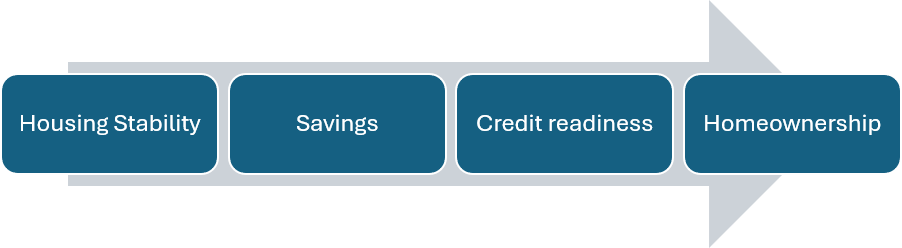
For existing homeowners:
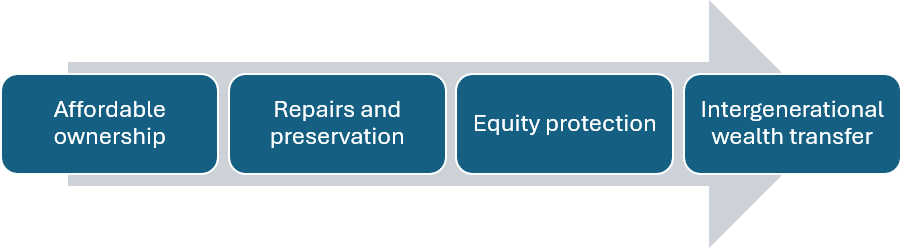
Both pathways are necessary if homeownership is to function as a sustainable pathway to community wealth. For legacy homeowners in particular, financial mobility strategies should extend beyond home acquisition to include affordable home repairs, property tax and insurance assistance, foreclosure prevention, estate planning, heirs’ property and title assistance, and tools that help residents preserve and responsibly transfer home equity.
Beyond homeownership: Other ways to build wealth
Wealth-building opportunities beyond homeownership appear limited for many Westside residents. Only 29% of Westside residents said they currently have opportunities to build long-term wealth, while 60% said they did not and another 11% were unsure. Access to wealth-building opportunities is particularly limited among households earning $25,000 or less, 19% of whom reported feeling that they currently have opportunities to build wealth.
Access to common wealth-building vehicles was limited, with only 17% of Westside survey participants reporting having an employer-provided or individual retirement account, compared with 60% of U.S. adults.32 As shown in Figure 17, ownership of investment accounts varied substantially by income, race, and housing tenure, with Black residents, renters, and lower-income households less likely to hold retirement and other investment accounts. These patterns reinforce the broader finding that access to wealth-building opportunities is closely tied to residents’ existing economic resources and assets, highlighting an opportunity to expand low-barrier pathways to wealth-building for residents who have historically faced exclusion.
Figure 17: Westside Residents’ Retirement Savings & Investments
|
Retirement account* |
Stocks, bonds, mutual funds** |
Certificates of Deposit |
529 accounts*** |
|---|---|---|---|---|
Total |
17% |
8% |
5% |
4% |
White residents |
40% |
17% |
13% |
11% |
Black residents |
7% |
4% |
2% |
0% |
Homeowners |
31% |
12% |
8% |
8% |
Renters |
12% |
6% |
4% |
2% |
Household income >$50K |
21% |
10% |
5% |
7% |
Household income <$50K |
14% |
5% |
5% |
1% |
* Employer-provided retirement account or individual retirement account.
** Held outside of retirement accounts.
***529 accounts are tax-advantaged savings accounts designed primarily to help families pay for qualified education expenses.
In focus groups and interviews, residents expressed frustration about limited wealth-building opportunities for much of the community, with one resident observing the following, which points to broader concerns about growing wealth divides:
“We’re just seeing what we always see, the rich getting richer.”
Participants expressed a desire for solutions that support generational wealth accumulation, such as investment opportunities and savings plans that can be passed down to children. Many also expressed a need for assistance with long-term financial planning, including retirement savings and investment strategies.
The opportunity is therefore not simply to provide more financial education about investing, but to make wealth-building vehicles more accessible, affordable, and automatic. Potential strategies include:
Retirement savings: Promote automatic retirement savings through employers, payroll contributions, and matching opportunities.
Investment access and education: Pair low-barrier, low-fee investment products with plain language financial education to broaden participation among residents who have historically had fewer opportunities to access these tools.
Youth and family asset-building: Expand opportunities for baby bonds, 529 accounts, 530A accounts, Individual Development Accounts (IDAs), and other child and youth savings or investment accounts to create assets that are not dependent solely on parents’ ability to save.33
Seed and match long-term investments: Use employer, philanthropic, and public partnerships to provide initial deposits, matching contributions, or other incentives that help residents begin investing even when they have limited resources to contribute independently.
This
approach would complement, not replace, homeownership as a
wealth-building strategy. For residents who cannot or do not yet want
to purchase a home, accessible retirement, investment, and child
asset-building accounts can provide additional pathways to accumulate
and transfer wealth over time. These also create opportunities for
residents who already own homes to diversify their assets and build
financial security beyond housing wealth.
Conclusion
The Westside's financial challenge is a financial mobility problem — not simply a financial literacy problem.
Taken together, these findings demonstrate a cycle of financial vulnerability affecting many Westside residents. When limited income, high housing costs, unexpected expenses, or income disruptions leave households without sufficient financial reserves, some may turn to credit to manage short-term needs. When affordable credit is unavailable, reliance on higher-cost borrowing may increase debt burdens or damage credit, which can in turn make it harder to rebuild savings, qualify for mainstream credit, purchase a home, preserve existing assets, or pursue other wealth-building opportunities.
Westside residents do not lack financial aspirations or effort.
Residents are working, saving, using financial products, pursuing homeownership, building businesses, and seeking ways to improve their financial futures. The challenge is that these efforts often take place amid high and rising costs, income volatility, financial exclusion, and products that extract wealth rather than help build it. Strengthening financial mobility requires both expanding opportunities to build income and wealth and protecting the resources residents already have.
Financial vulnerability is not simply a matter of individual financial behavior or financial access.
Many residents already use banks, savings accounts, and credit products, yet continue to experience unexpected fees, loan denials, high-cost borrowing, and financial stress. Access alone is not enough: financial products must be affordable, transparent, accessible, and responsive to residents’ circumstances, while also connecting them to opportunities to build financial resilience and assets. The report’s recommendations therefore emphasize the quality and design of financial access, including community-rooted banking, transparent products, credit-building tools, emergency savings, and safe alternatives to high-cost borrowing.
There is no single pathway to financial mobility.
Residents face different barriers depending on their income, household responsibilities, employment, age, housing status, and other circumstances. This report showcases a connected financial mobility ecosystem - one that combines inclusive banking with income and savings supports, affordable credit and debt reduction strategies, tailored services for renters and homeowners, and opportunities to build wealth beyond homeownership.
Ultimately, building financial resilience requires moving beyond access and toward the conditions that allow residents to build, protect, and sustain lasting financial security.
This will require continued investment and collaboration among financial institutions, employers, government, philanthropy, community-based organizations, and residents themselves. Creating ongoing mechanisms for resident input, shared decision-making, and accountability can help ensure that neighborhood investments respond to residents’ priorities and strengthen the communities that have sustained the Westside over time. Together, residents and partners can help create a Westside where residents have greater opportunities to build income and assets, access responsible capital, withstand financial shocks, and preserve the wealth they have worked to create.
Endnotes
U.S. Census Bureau. (2025). QuickFacts: Atlanta city, Georgia. https://www.census.gov/quickfacts/fact/table/atlantacitygeorgia/PST045225.
↩U.S. Census Bureau. (2024). American Community Survey, 2024 ACS 1-Year Estimates. https://data.census.gov. Data retrieved and compared across Atlanta Neighborhood Planning Units (NPUs) using Neighborhood Nexus, https://neighborhoodnexus.org.
↩Chenault, A. (2025, August 19). Vine City & English Avenue: A tale of two neighborhoods. ATL Downtown West. https://atldowntownwest.com/2025/08/19/vine-city-english-avenue-a-tale-of-two-neighborhoods.
↩City of Atlanta. (2004). Vine City Redevelopment Plan. City of Atlanta Department of Planning and Development. www.atlantaga.gov.
↩City of Atlanta. (n.d.) Westside Promise Zone. https://www.atlantaga.gov/government/departments/city-planning/economic-development/westside-promise-zone. The Westside Promise Zone is a federally designated area established in 2016 to coordinate public, private, philanthropic, and community efforts to reduce poverty and expand economic opportunity across five historic Westside neighborhoods.
↩City of Atlanta. (1998). Westside Redevelopment Plan & Tax Allocation Bond District. Accessible via www.investatlanta.com.
↩Westside Future Fund. (2017, April 12). Westside Future Fund, City of Atlanta announce Anti-Displacement Tax Fund program. https://www.westsidefuturefund.org/news/tax-fund.
↩Partnership for Southern Equity. (2023). An Analysis of Atlanta’s Tax Allocation Districts and Their Impacts on Communities of Color. https://psequity.org/wp-content/uploads/2023/11/DEED-White-Paper-Final-2023.pdf
↩Opportunity Insights. (n.d.) The Opportunity Atlas. https://www.opportunityatlas.org
↩Westside Future Fund. (2017, December). Westside Land Use Framework Plan. https://www.westsidefuturefund.org/wp-content/uploads/2017/12/Westside-Land-Use-Framework-Plan-Abbrev-Dec-2017.pdf. The Westside Land Use Framework Plan is a community-informed plan adopted in 2017 to guide equitable development, neighborhood retention, housing, transportation, and investment across Atlanta’s Historic Westside.
↩Alston, J. (2026, June 8). Vine City organizations say promises were broken ahead of World Cup. Atlanta News First. https://www.atlantanewsfirst.com/2026/06/08/vine-city-organizations-say-promises-were-broken-ahead-world-cup.
↩Georgia Budget and Policy Institute. (2025, July 17). Historic Federal Tax Shift Benefits Wealthiest, Grows Deficit and Exacerbates Georgia’s Rural Challenges. https://gbpi.org/deficit-spending-regressive-revenue-and-rural-harm-how-federal-reconciliation-hurts-georgians.
↩City of Atlanta. (n.d.). Atlanta Neighborhood Reinvestment Initiative. https://atlneighborhoods.org.
↩U.S. Census Bureau. (2024). American Community Survey, 2024 ACS 1-Year Estimates. Average household size is 2.5 nationally.
↩TransUnion. (2026, April 30). U.S. Consumer Credit Market Increasingly Splitting Along a K Shaped Path, TransUnion Research Finds. https://newsroom.transunion.com/k-shaped-q1-2026-ciir.
↩For more on the harmful impacts of these products, see: Center for Responsible Lending. (2024) A Loan Shark in Your Pocket: The Perils of Earned Wage Advance; Consumer Financial Protection Bureau. (2022, September). Buy Now, Pay Later: Market Trends and Consumer Impacts; and Georgia Watch. (2018, August). Making Small-Dollar Lending Safer for Georgians.
↩Multivariable logistic regression was used to assess the independent relationship between household income and major financial outcomes, controlling for education, employment, age, race, gender, and homeownership; results were adjusted for multiple comparisons.
↩The Georgia Resilience and Opportunity Fund’s “In Her Hands” initiative is a guaranteed income pilot providing no-strings-attached monthly cash payments to income-eligible women in Atlanta and other parts of Georgia. See: https://thegrofund.org/about-in-her-hands.
↩Brooks, F. P., Riley, H. E. M., & Whitley, D. M. (2026). TANF Leavers and Debt: An Exploratory Study From Georgia. Families in Society, 107(1), 301–312.
↩Constantine, L., & Rogers, A. (2026, June). We Woke Up to Them Taking Our Car: Borrowers’ Experiences with Subprime Auto Lending. Center for Responsible Lending. https://www.responsiblelending.org/research-publication/we-woke-them-taking-our-car-borrowers-experiences-subprime-auto-lending.
↩Jacob, Z., Lee, D., Mangrum, D., Scally, J. W., & van der Klaauw, W. (2026, May 12). Federal Student Loan Defaults Return After Pandemic Pause. Federal Reserve Bank of New York, Liberty Street Economics. https://libertystreeteconomics.newyorkfed.org.
↩One local example is the Community Foundation for Greater Atlanta’s Student Loan Repayment Program, which provides direct debt relief to eligible metro Atlanta residents: https://cfgreateratlanta.org/student-debt.
↩Atlanta Regional Collaborative for Health Improvement (ARCHI), Undue Medical Debt, and PerryUndem. (2022, September). Understanding the Impacts of Medical Debt on Atlantans.
↩An interesting example of on-site financial services is Boston Medical Center’s StreetCred program, which integrates free tax preparation, financial coaching, and access to public benefits and other economic resources into routine pediatric and prenatal care. See: https://www.bmc.org/streetcred.
↩Georgia Watch. (2018, August). Making Small-Dollar Lending Safer for Georgians. https://georgiawatch.org.
↩For more information on Georgia’s title-lending industry, see ProPublica and The Current’s The Title Pawn Trap series: https://www.propublica.org/series/the-title-pawn-trap.
↩Consumer Financial Protection Bureau. (2022 September). Buy Now, Pay Later: Market Trends and Consumer Impacts. https://files.consumerfinance.gov/f/documents/cfpb_buy-now-pay-later-market-trends-consumer-impacts_report_2022-09.pdf
↩Center for Responsible Lending. (2024, October). Earned Wage Advance (EWA) Products: States Should Regulate as Credit to Protect Consumers—Georgia. https://www.responsiblelending.org/sites/default/files/uploads/files/ewa-states-ga-oct2024.pdf
↩Caldwell, J., Sharpe, N., Allard Agnamba, L., & Davis Tribble, B. (2018). Westside early childhood needs assessment final report. School Readiness Consulting. https://srcsite.squarespace.com/resources/westside-needs-assessment.
↩Urban Institute. (n.d.). Reducing the Racial Homeownership Gap. Housing Finance Policy Center. Accessed August 24, 2026. https://www.urban.org/policy-centers/housing-finance-policy-center/projects/reducing-racial-homeownership-gap.
↩Wilson Spotser, M., Wang, C. Y., & Weiss, S. (2026, May). Ambition Without Access: Race, Generation & the Barriers to Wealth Building in America—Findings from JBI’s 2050 Survey. Julian Bond Institute for Financial Equity Research. https://julianbondinstitute.org/2050-survey.
↩Board of Governors of the Federal Reserve System. (2024, May). Report on the Economic Well-Being of U.S. Households in 2023: Retirement and Investments. https://www.federalreserve.gov/publications/2024-economic-well-being-of-us-households-in-2023-retirement-investments.htm.
↩530A accounts (also known as “Trump Accounts”) are child investment accounts structured as traditional individual retirement accounts that can build assets over childhood and into adulthood. Individual Development Accounts (IDAs) are matched savings accounts that help lower-income households build assets for goals such as education, homeownership, or business ownership, while baby bonds provide publicly seeded capital intended for wealth-building purposes. In Atlanta, the GRO Fund is piloting this approach through “Freedom Futures,” which combines an investable baby bond with guaranteed income and financial advising. Other examples of youth investment accounts include Harlem Children’s Zone’s “Wealth Builds” initiative, which provides seeded college savings accounts and Youth Opportunity Funds to help young people build assets for education, homeownership, entrepreneurship, and retirement. The model is also being piloted in Atlanta through the East Lake Foundation’s Wealth Builds Atlanta initiative.
↩
About this Report
About the Julian Bond Institute
The Julian Bond Institute for Financial Equity Research (JBI) is an initiative of the Center for Responsible Lending (CRL). It is named for Julian Bond — civil rights leader, co-founder of the Student Nonviolent Coordinating Committee, longtime NAACP chairman, and founding member of CRL’s board — because the work of financial equity is inseparable from the work of civil rights. Bond understood that economic exclusion and political exclusion reinforce each other, and that dismantling one requires confronting both.
JBI’s mission is to produce research that the financial system cannot ignore: rigorous, representative, and grounded in the lived realities of the communities that mainstream financial research has too often treated as an afterthought. The 2050 Survey is JBI’s flagship effort — a comprehensive study of how race and generation intersect in shaping financial experiences and aspirations. It is designed not just to document where things stand, but to provide the evidence base that policymakers, financial institutions, and community advocates need to advance financial equity.
About the Authors
Alex Rogers is a researcher at the Center for Responsible Lending. Alex’s professional background includes advocating for people experiencing pretrial incarceration. Alex is passionate about using qualitative social science methods to inform change and address inequalities. Their past research projects include building a dataset on police-involved shootings and conducting nationwide interviews on differences in racial attitudes among computer science students. A mixed-methods researcher, Alex leads the qualitative data collection and analysis efforts at CRL. They earned a bachelor’s degree in sociology from Pacific University and a master’s degree in sociology from Duke University.
Mandy Eidson is the Director of Business Development and Community Engagement at Self-Help Credit Union, part of the Self-Help family of nonprofits that includes the Center for Responsible Lending. With deep expertise in community development finance and affordable housing, Mandy is passionate about connecting capital with communities to create lasting impact. A proud Atlanta native, Mandy serves on the boards of HouseATL and the Georgia Social Impact Collaborative and on the advisory boards for Westside Works, the West End Main Street Council, and the Atlanta Neighborhood Development Partnership. She earned her bachelor’s degree from the University of North Carolina at Chapel Hill, and a master’s degree in urban studies from the European Union’s 4Cities program.
Dr. Tamecia Curry received a BSW and MSW from the University of Southern Mississippi. She earned a PhD in Social Work from Louisiana State University. Her research examines mental health service utilization rates among African American emerging adults with an emphasis on mental health stigma in the Black community and minority help-seeking behaviors. She has worked as a school-based clinician, a wraparound facilitator serving families and at-risk youth in need of mental health service intervention, and now serves the bright-minded students of Clark Atlanta University.
Acknowledgments
The authors would like to express gratitude to the residents of the English Avenue and Vine City neighborhoods who participated in focus groups, surveys, and interviews. Their contributions shed light on the strengths and challenges of people living in Atlanta’s Westside.
The authors would like to acknowledge Dr. Latrice Rollins, Dr. Tiffany Younger, Dr. Sara Weiss, and Aaron Quick for their assistance in conceptualizing this work, collecting data, and grounding the work in Atlanta’s community. Thank you also to the following Atlanta partners who supported this work through recruitment and review:
Westside Works
Southern Poverty Law Center
Kindred Futures
Georgia Watch
Georgia Resilience and Opportunity Fund
Dr. Fred Brooks, Georgia State University
Westside Health Collaborative
Morehouse School of Medicine Prevention Research Center
Fathers Matter ATL
About the Center for Responsible Lending
The Center for Responsible Lending (CRL) is a non-partisan, nonprofit research and policy advocacy organization working to promote financial fairness and economic opportunity for all, end predatory lending, and close the racial wealth gap. CRL’s expertise gives it trusted insight to evaluate the impact of financial products and policies on the wealth and economic stability of families of color, rural, women, military, low-wage, low-wealth, and early-career workers and communities. CRL is an affiliate of Self-Help, one of the nation’s largest nonprofit community development financial institutions. We work in partnership with national and local consumer, faith, and civil rights organizations.
302 West Main Street
Durham, NC 27701
Ph (919) 313-8500
Fax (919) 313-8595 California
1970 Broadway
Suite 350
Oakland, CA 94612
Ph (510) 379-5500
Fax (510) 893-9300 District of Columbia
910 17th Street NW
Suite 500
Washington, DC 20006
Ph (202) 349-1850
Fax (202) 289-9009